

Building on the first part of this exclusive interview where Dr. Nicolae Țibrigan examined disinformation as a somatic and psychological attack that exhausts attention, exploits identity and trauma, and undermines our very capacity to process reality — the conversation now turns to the Romanian and regional context. We explore how historical wounds and collective patterns interact with modern platform architectures to shape vulnerabilities, the strategic use of gendered attacks to silence voices, and the essential responsibility of the individual citizen in a continuous hybrid information conflict. What emerges is a coherent picture: the war on reality is fought simultaneously in our bodies and in our public sphere.

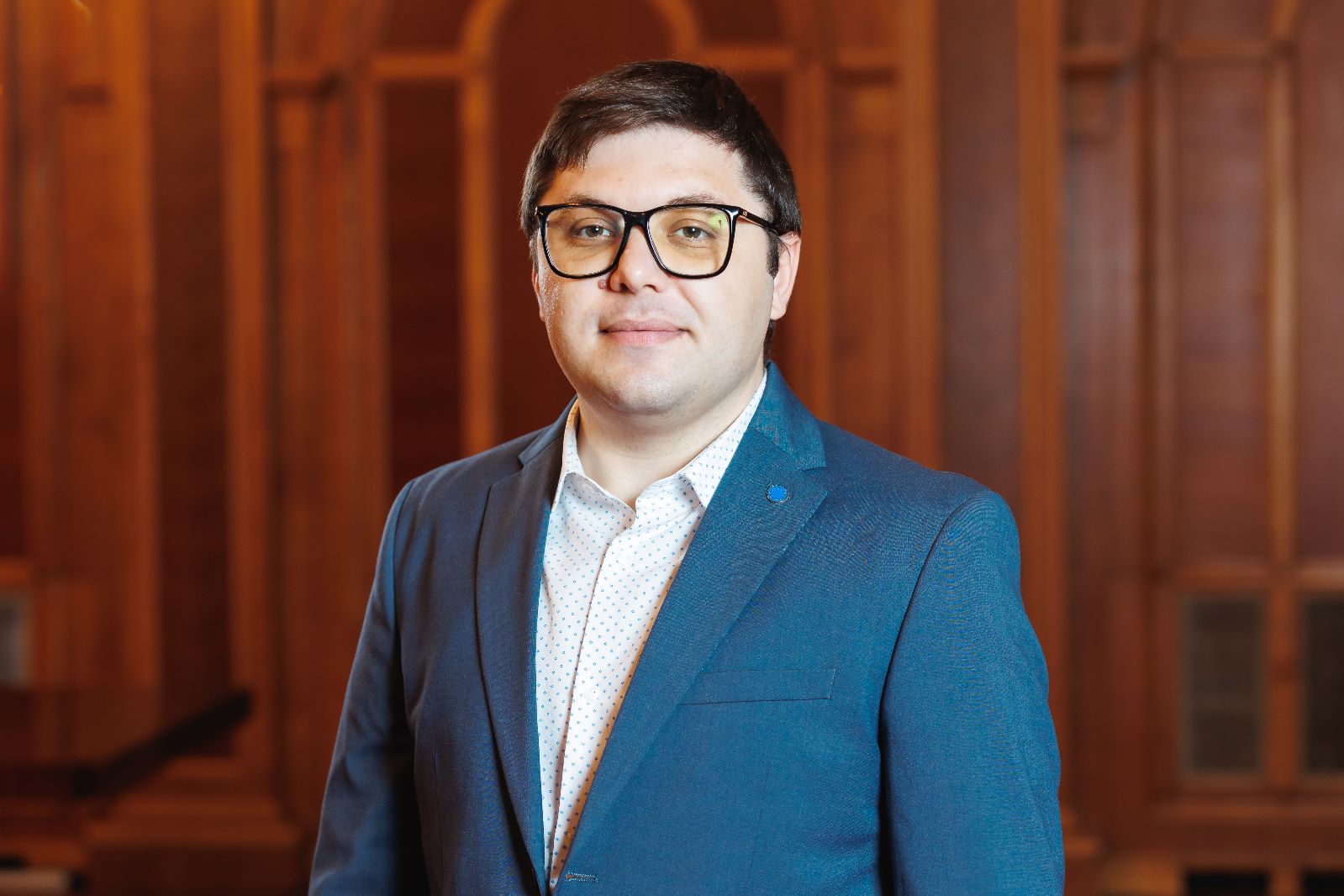
Dr. Nicolae Țibrigan is a sociologist, researcher, and expert on disinformation and information warfare. As a researcher at the Romanian Academy and coordinator of the Digital Forensic Team, he studies how propaganda, digital influence operations, and emerging technologies reshape democratic societies, public trust, and civic resilience in Eastern Europe.
- What are the main collective psychological patterns that make Romanian society vulnerable to propaganda?
Romanian society is not uniquely vulnerable to propaganda, but it does possess several historical and psychological characteristics that can be exploited by domestic and foreign influence actors. One important factor is low institutional trust. Decades of authoritarian rule during communism, followed by political scandals, corruption, and unfulfilled promises after 1989, have left many Romanians skeptical of political institutions, mainstream media, and public authorities. While a healthy degree of skepticism is beneficial in a democracy, excessive distrust can create fertile ground for conspiracy theories and alternative narratives that present themselves as “hidden truths.” A second factor is the tendency to personalize political and social issues. Many citizens evaluate information not through institutions or policies, but through individuals they trust or identify with. This makes charismatic influencers, political outsiders, and social media personalities particularly influential in shaping public opinion. A third vulnerability is the perception that ordinary people are often excluded from important decisions. Feelings of frustration, insecurity, or lack of control can increase receptivity to narratives that identify simple causes and simple solutions for complex problems. Populist and disinformation campaigns frequently exploit these sentiments by presenting society as a struggle between “the people” and various alleged enemies or elites.
Romania is also affected by a broader phenomenon visible across many democracies: information overload. Citizens are exposed to enormous quantities of information every day, making it increasingly difficult to distinguish between credible reporting, opinion, propaganda, and outright falsehoods. In such environments, emotions often become more influential than facts. I would highlight a strong desire for certainty in periods of crisis. Whether during the pandemic, the war in Ukraine, economic uncertainty, or political tensions, many people seek clear explanations and predictable answers. Unfortunately, propaganda often provides exactly that: simple narratives for a complex world. Taken together, these factors do not make Romanians gullible. Rather, they make Romanian society vulnerable in ways that are very similar to other European democracies. The challenge is not a lack of intelligence, but the interaction between historical experiences, emotional needs, technological change, and an increasingly competitive information environment.
- Is there a specific historical wound or form of generational trauma that feeds Romania’s vulnerability to disinformation and propaganda? How is it transmitted across generations?
I would be cautious about speaking of a single historical wound because Romanian society is shaped by multiple layers of historical experience. However, if I had to identify one enduring legacy, it would be the deep culture of distrust and adaptive survival inherited from the communist period. For decades, Romanians lived in a system where official narratives often contradicted everyday reality. Citizens learned that public discourse and private beliefs were frequently different. Trust was placed not in institutions, but in family networks, close friends, and informal sources of information. In many ways, this was a rational survival strategy under an authoritarian regime.
The problem is that some of these habits outlived communism itself. Although younger generations did not directly experience the communist era, they often inherited attitudes toward authority, institutions, and public life from their parents and grandparents. This transmission rarely occurs through formal education. It happens through family conversations, personal stories, collective memories, and shared cultural assumptions. Messages such as “don’t trust politicians,” “there is always something hidden behind the official story,” or “powerful actors never tell the whole truth” can be passed from one generation to another. What originally functioned as a protective mechanism against authoritarian propaganda can sometimes become a vulnerability in democratic societies. Excessive distrust may lead people to reject credible information alongside misleading information, making it easier for conspiracy theories and disinformation campaigns to gain traction. At the same time, Romania’s history has also produced sources of resilience. Many Romanians have a strong instinct for questioning authority and recognizing manipulation. The challenge is to transform this inherited skepticism into critical thinking rather than generalized distrust. The most significant legacy may not be trauma itself, but the relationship with trust that trauma has created. Societies that struggle to trust institutions often become more vulnerable to actors who offer alternative explanations, simple certainties, and emotionally appealing narratives. This is why strengthening democratic resilience requires not only combating disinformation, but also rebuilding trust between citizens and the institutions that serve them.
- Does the Romanian reflex of distrust toward grandiose language and official narratives, inherited in part from the post-communist experience, protect us from one type of manipulation while making us more vulnerable to another?
Yes, I believe it does. Like many historical legacies, this reflex has both strengths and weaknesses. On the one hand, a certain degree of distrust toward grandiose promises, political slogans, and official narratives can act as a protective mechanism. Romanians who lived through communism – or grew up hearing stories about it – learned that official discourse does not always reflect reality. This experience created a healthy instinct to question authority, verify claims, and look beyond appearances.
In this sense, Romanian society may be less vulnerable to traditional propaganda that relies on unquestioning trust in institutions or state-controlled narratives. Many citizens are naturally skeptical when politicians, governments, or powerful organizations present overly simplistic or overly optimistic messages. On the other hand, the same reflex can create new vulnerabilities. When distrust becomes generalized, people may begin to treat all sources of information as equally unreliable. The danger is that legitimate criticism of institutions can evolve into the belief that every institution is inherently deceptive. At that point, citizens may become more receptive to alternative narratives simply because they oppose the mainstream, not because they are supported by evidence. This is one of the paradoxes of the digital age. A person who distrusts official information may not become better informed; they may simply transfer their trust to influencers, anonymous social media accounts, conspiracy entrepreneurs, or foreign propaganda outlets that present themselves as anti-establishment voices.
The challenge, therefore, is not to eliminate skepticism but to channel it productively. Democratic societies need citizens who ask questions and demand accountability. However, skepticism should be accompanied by critical thinking, evidence, and a willingness to revise one’s views when credible information becomes available. The goal is to avoid two extremes: blind trust and blind distrust. Both can be exploited. The most resilient citizens are those who remain skeptical without becoming cynical and who evaluate claims based on evidence rather than on whether they come from an official or anti-establishment source.
- What is the mechanical relationship between polarization and civic exhaustion? Does disinformation accelerate exhaustion, or does it produce it?
Polarization and civic exhaustion are closely connected and often reinforce one another in a self-perpetuating cycle. Polarization divides society into competing camps that increasingly view each other not as political opponents, but as threats. As public debate becomes more confrontational, citizens are exposed to constant conflict, outrage, and emotional pressure. Over time, many people become tired of the hostility and withdraw from civic engagement altogether. Disinformation plays a role at both stages of this process.
First, it can accelerate polarization by amplifying divisive issues, exaggerating differences, and promoting narratives that portray compromise as betrayal. Social media algorithms often reward emotionally charged content, making conflict more visible and more engaging than nuance. Second, disinformation can produce and deepen civic exhaustion. Citizens are exposed to a continuous stream of contradictory claims, scandals, conspiracies, and emotionally charged content. Eventually, many people feel overwhelmed and conclude that understanding reality is simply too difficult or time-consuming. This is precisely why many modern influence operations do not seek to convince everyone of a single narrative. Their goal is often to create confusion, distrust, and fatigue. A society does not need to be persuaded in order to become vulnerable; it only needs to become exhausted.
The result is a vicious circle: polarization generates exhaustion, exhausted citizens disengage, and disengagement creates opportunities for further manipulation. In the long run, the greatest danger is not disagreement itself, but the gradual loss of citizens willing and able to participate in democratic life.
- How do sexist or gendered disinformation campaigns function as strategic tools for removing certain voices from the public sphere?
Sexist and gendered disinformation campaigns are rarely just personal attacks. In many cases, they function as strategic tools designed to undermine credibility, discourage participation, and ultimately push certain individuals out of public debate. Unlike ordinary political criticism, these campaigns often focus not on a person’s ideas, qualifications, or actions, but on their gender, appearance, family life, emotions, or personal relationships. Women in politics, journalism, academia, and civil society are frequently portrayed as incompetent, unstable, immoral, or manipulated by hidden actors. The objective is to shift attention away from their arguments and toward their identity. This type of attack is particularly effective because it exploits existing social stereotypes and prejudices. Rather than debating what a person says, it encourages audiences to question whether that person deserves to be heard at all. Social media has amplified this phenomenon. Coordinated harassment campaigns, manipulated images, false rumors, and abusive comments can spread rapidly and create a hostile environment for public participation. In some cases, the goal is not necessarily to convince the wider public, but to exhaust the target psychologically and emotionally. The broader consequence is a chilling effect. When individuals observe the harassment directed at journalists, activists, researchers, or politicians – particularly women and members of vulnerable groups – some may decide that public engagement is simply not worth the personal cost. As a result, important voices may withdraw from public life, and democratic debate becomes less diverse and less representative.
This is why gendered disinformation should be understood not only as a social or cultural issue, but also as a democratic resilience issue. Its purpose is often to narrow the range of voices that can safely participate in public discourse. I think the goal of these campaigns is not merely to damage reputations. It is to shape who feels entitled, safe, and capable of speaking in the public sphere. When disinformation succeeds in silencing voices through intimidation rather than argument, democratic debate itself is weakened.
- How can democratic societies respond to these campaigns while respecting democratic values? How do you navigate the tension raised by Kant’s categorical imperative — that any defensive measure must be universalizable without undermining the very freedoms it seeks to protect?
This is one of the most difficult challenges facing democracies today. Unlike authoritarian regimes, democratic societies cannot simply suppress undesirable information or silence opponents. The strength of democracy lies precisely in its commitment to freedom of expression, pluralism, and open debate. The challenge is therefore not only how to defend democracy, but how to defend it democratically. Kant’s categorical imperative offers a useful principle here. Before adopting any measure against disinformation or manipulation, we should ask ourselves: Would this rule remain legitimate if it were applied universally, including by political actors we disagree with? If the answer is no, then we should be cautious.
For this reason, I believe democratic societies should focus on increasing transparency and accountability rather than restricting opinions. Citizens have the right to hold controversial, unpopular, or even misguided views. What should concern us are deceptive practices that distort the conditions of democratic debate. For example, there is a significant difference between a citizen expressing a political opinion and a coordinated network of fake accounts impersonating citizens in order to artificially amplify a narrative. There is also a difference between legitimate political persuasion and undisclosed foreign influence operations designed to manipulate public opinion. The goal should therefore be to protect the integrity of the public sphere, not to police thought.
This means investing in media literacy, supporting independent journalism, increasing transparency of political advertising, exposing coordinated inauthentic behavior, and strengthening institutional communication. It also means ensuring that platform rules are applied consistently and transparently, with clear safeguards against abuse. Importantly, democratic resilience cannot be built solely through regulation. Citizens themselves must become part of the solution. A society that relies exclusively on governments or platforms to determine what is true risks creating new forms of dependency and mistrust. In my view, the most sustainable response is one that increases citizens’ ability to evaluate information for themselves. Education, critical thinking, and transparency are ultimately more compatible with democratic values than censorship or excessive state intervention. A democracy should not seek to win the information war by adopting the methods of its adversaries. It should seek to strengthen the conditions under which truth, evidence, and free debate can prevail. Otherwise, there is a risk of protecting democracy in ways that gradually weaken the very freedoms that make it worth protecting in the first place.
- At what point does platform neutrality become architectural responsibility?
Platform neutrality becomes architectural responsibility when a platform’s design choices begin to systematically shape what people see, believe, and discuss at scale. In the early days of the internet, platforms often presented themselves as passive intermediaries – a digital equivalent of a telephone company that simply connected people. Today, that comparison is increasingly difficult to sustain. Modern platforms do not merely host information; they actively organize, prioritize, recommend, amplify, and suppress content through algorithms. When an algorithm determines which posts reach millions of users and which remain largely invisible, the platform is no longer a neutral conduit. It becomes an architect of the information environment.
This does not mean platforms should decide what citizens are allowed to think. However, it does mean they should acknowledge their responsibility for the systems they create. The architecture of a platform influences incentives, visibility, and behavior. If outrage, sensationalism, and polarization consistently receive greater visibility because they generate engagement, then those outcomes are not accidental – they are partly products of design. A useful analogy is urban planning. A city planner does not control where every citizen walks, but the design of roads, bridges, parks, and public spaces influences how people move and interact. Similarly, platform designers influence information flows through recommendation systems, engagement metrics, moderation policies, and advertising models. In my view, neutrality becomes responsibility when a platform possesses both the capacity to shape public discourse and the knowledge that its design choices influence societal outcomes. At that point, claiming complete neutrality becomes increasingly difficult. The question is no longer whether platforms influence democratic debate – they clearly do. The real question is how that influence can be exercised transparently, responsibly, and in a manner consistent with democratic values and freedom of expression.
- Who are the main actors, state-linked, domestic, commercial, or otherwise, and which platforms, such as TikTok, Telegram, and X, currently carry the most influence in Romania and the Republic of Moldova?
The information environment in Romania and the Republic of Moldova is shaped by a diverse ecosystem of actors whose motivations range from geopolitical influence and political power to financial gain and ideological activism.
Among external actors, Russia remains one of the most significant sources of information influence operations in the region. Since the full-scale invasion of Ukraine in 2022, numerous studies by European institutions, independent researchers, and civil society organizations have documented attempts to amplify narratives aimed at weakening trust in democratic institutions, NATO, the European Union, support for Ukraine, and the broader Euro-Atlantic orientation of the region. These efforts rarely rely on a single channel. Instead, they combine state media, proxy websites, social media influencers, Telegram channels, and local amplifiers. However, external actors are only part of the picture. Domestic political actors increasingly employ techniques that resemble those used in information operations: emotional polarization, coordinated online amplification, selective use of facts, and highly targeted messaging designed to mobilize supporters or discredit opponents. In many cases, the distinction between political campaigning, influence operations, and commercial attention-seeking has become increasingly blurred.
Commercial actors also play an important role. Many websites, influencers, and content creators benefit financially from outrage, sensationalism, and conspiracy content because engagement generates advertising revenue, visibility, and audience growth. Not every misleading narrative is driven by ideology or geopolitics; sometimes it is driven by business incentives. Regarding platforms, each plays a different role. TikTok has become one of the most influential platforms, particularly among younger audiences, due to its highly effective recommendation algorithm. Its ability to rapidly amplify emotionally engaging content makes it a powerful tool for both legitimate political communication and information manipulation. The speed at which narratives can spread on TikTok is unprecedented in many respects.
Telegram functions differently. It is less important in terms of mass reach but highly significant for coordination, community-building, and the dissemination of alternative or fringe narratives. It often serves as an ecosystem where information circulates with limited moderation before migrating to larger platforms. X (formerly Twitter) remains influential among journalists, politicians, activists, researchers, and opinion leaders. While its overall audience is smaller than that of TikTok or Facebook, its impact on agenda-setting remains disproportionate because many public debates originate there before reaching mainstream media. In Romania, Facebook continues to play a major role, especially among middle-aged and older demographics, while in the Republic of Moldova, Telegram has an even stronger political and informational presence than in most EU countries. The most influential actor is often not a particular state, platform, or organization, but the interaction between them. Modern information influence operates through networks rather than hierarchies. State actors, domestic political actors, commercial incentives, influencers, and platform algorithms frequently reinforce one another, creating complex ecosystems where narratives can spread rapidly across multiple channels and audiences. Understanding these interconnected ecosystems is increasingly important because modern information warfare is rarely conducted by a single actor acting alone. It is usually the product of overlapping interests, technologies, and amplification mechanisms operating simultaneously.
- The profile of the “misinformed Romanian” in 2026 is no longer simply that of a person with low education. What socio-psychological profile has emerged instead?
One of the biggest misconceptions about disinformation is the belief that it primarily affects poorly educated or uninformed individuals. The reality is much more complex. In 2026, vulnerability to disinformation is less a matter of education level and more a matter of how people process information, trust institutions, and relate to uncertainty. The typical “misinformed Romanian” is not necessarily someone who lacks access to information. On the contrary, they are often highly connected, consume large amounts of content online, and actively follow political or social issues. The problem is not information scarcity, but information overload.
What we increasingly observe is a profile characterized by several factors: low trust in institutions, high emotional engagement with public issues, strong identity-based thinking, and a preference for alternative sources that claim to reveal “what others don’t want you to know.” Many such individuals are not politically disengaged. In fact, they are often highly engaged. They follow current events, participate in online discussions, and actively seek information. However, they tend to place greater trust in influencers, online communities, or alternative media ecosystems than in traditional institutions, experts, or mainstream journalism.
Another important characteristic is a low tolerance for uncertainty. Complex problems rarely have simple solutions, yet human beings naturally seek clarity and predictability. Narratives that offer certainty, identify clear villains, and provide emotionally satisfying explanations can therefore become highly attractive, regardless of their factual accuracy. We also see the growing influence of what I would call identity-driven information consumption. Many people increasingly evaluate information not by asking, “Is this true?” but rather, “Is this consistent with the values and beliefs of my group?” In such cases, social belonging can become more influential than evidence. Importantly, this profile can be found across different educational, professional, and social backgrounds. University graduates, entrepreneurs, professionals, and even experts can become vulnerable when narratives resonate with their fears, frustrations, ideological preferences, or sense of identity. For this reason, I believe the key dividing line in today’s information environment is not between educated and uneducated citizens. It is between those who maintain intellectual humility and those who become trapped in informational certainty. The most resilient individuals are often not those who know the most, but those who remain willing to question their assumptions, verify sources, and accept complexity. The challenge of 2026 is not a lack of information. It is learning how to navigate an environment where information is abundant, attention is scarce, and emotions increasingly compete with evidence for influence over public opinion.
- What has formal education failed to teach about attention, evidence, emotional manipulation, and digital trust?
I believe formal education has done a reasonably good job teaching students how to find information, but a much less effective job teaching them how to navigate an environment saturated with information. For decades, education was built around the assumption that knowledge was scarce and that the main challenge was access. Today, the opposite is true. Information is abundant, but attention has become scarce. Yet very few students are taught how digital platforms compete for their attention, how algorithms shape what they see, or how emotional content influences decision-making.
We also tend to teach facts more effectively than we teach epistemology—the process of knowing. Students learn what to think about certain subjects, but often receive less training in how to evaluate evidence, compare sources, assess credibility, or recognize uncertainty. In a world increasingly shaped by AI-generated content, these skills are becoming just as important as factual knowledge itself. Another gap concerns emotional manipulation. Most people are taught mathematics, history, and literature, but very few are taught how fear, anger, outrage, identity, or social belonging influence their perception of information. Yet many modern influence operations are designed specifically to exploit emotions rather than reason. The issue of digital trust is equally important. Citizens often encounter information from journalists, experts, influencers, anonymous accounts, AI-generated content, and friends within the same social media feed. Formal education rarely provides clear frameworks for deciding whom to trust, under what conditions, and why. As a result, many people enter adulthood highly skilled at using digital technologies but less prepared to understand how those technologies influence their beliefs and behavior. In my view, one of the most important educational challenges of the twenty-first century is teaching not only digital literacy, but also attention literacy and epistemic literacy – the ability to manage one’s attention, evaluate evidence, understand emotional influence, and make informed judgments in an increasingly complex information environment.
- What concrete lessons can we draw from the Georgescu episode and from other recent disinformation campaigns?
One of the most important lessons from the Georgescu episode and other recent disinformation campaigns is that influence operations do not succeed simply because people lack information. They succeed because they exploit existing frustrations, distrust, social divisions, and emotional vulnerabilities. A second lesson is that algorithms can transform relatively marginal narratives into mainstream topics much faster than traditional media ecosystems ever could. In the past, influence campaigns often required significant financial and organizational resources. Today, a compelling narrative, amplified through social media platforms, influencers, and coordinated online activity, can reach millions of people in a very short period of time. We also learned that disinformation is no longer limited to spreading false information. Many campaigns focus on undermining trust in institutions, elections, experts, journalists, and democratic processes. The objective is often not to make citizens believe a particular story, but to make them doubt the credibility of all competing sources. Another important lesson is that fact-checking alone is not enough. By the time a false or misleading narrative is debunked, it may already have reached large audiences and generated strong emotional reactions. Democratic societies need to invest not only in reactive responses but also in long-term resilience through education, media literacy, institutional transparency, and public trust.
The Georgescu case also demonstrated that influence campaigns can no longer be viewed solely as a communication problem. They have become a matter of democratic resilience and, in some cases, national security. Information spaces are now strategic environments where domestic and foreign actors compete to shape perceptions, emotions, and political behavior. Finally, perhaps the most important lesson is that democracy cannot rely exclusively on institutions to defend itself. Citizens play a crucial role. The most effective protection against manipulation is a population that remains curious, critical, and willing to verify information before sharing it.
- What is the real state of Romania’s information security in 2026? Are we more vulnerable or more resilient than we were a few years ago?
Romania is both more resilient and more vulnerable than it was a few years ago. This may sound contradictory, but both realities coexist. On the one hand, awareness of disinformation has increased significantly. Public institutions, journalists, researchers, civil society organizations, and citizens are far more conscious of the risks posed by foreign influence operations, online manipulation, and information warfare than they were before Russia’s full-scale invasion of Ukraine. Romania also benefits from its membership in the European Union and NATO, which provides access to expertise, cooperation mechanisms, and strategic resources for countering information threats. On the other hand, the digital information environment has become far more challenging.
According to Eurobarometer data analyzed in late 2025 and early 2026, Romanians are among the most intensive consumers of social media-based news in the European Union. Romania ranks first in the EU for obtaining news and public affairs information through TikTok, with approximately 46% of respondents using the platform as a source of information, compared to the EU average of around 31%. WhatsApp has also become a major channel through which news and political content circulate.
This creates both opportunities and vulnerabilities. Social media platforms can increase access to information, but they also facilitate the rapid spread of misinformation, conspiracy theories, and emotionally charged content. The same Eurobarometer data showed that 55% of Romanians reported being exposed to false or misleading information “often” or “very often” during the previous week. Perhaps even more concerning is the generational dimension. Young Romanians are among the most confident in the European Union that they can recognize disinformation and avoid being influenced by it. Yet they are also among the groups most exposed to information environments dominated by algorithms, influencers, short-form video content, and highly personalized recommendation systems. This gap between perceived and actual vulnerability deserves serious attention.
The debates surrounding TikTok during recent electoral processes have further demonstrated that information security can no longer be separated from democratic security. European authorities have investigated the platform’s role in Romania amid concerns about coordinated influence campaigns, opaque recommendation systems, and the amplification of political content. Therefore, my assessment is that Romania has become more aware of the threat, but the threat itself has become more sophisticated. We are better equipped to recognize traditional propaganda than we were five years ago. However, we are now facing a new generation of influence operations driven by algorithms, platform dynamics, micro-targeting, and increasingly by artificial intelligence. In short, Romania is no longer naive about disinformation, but it remains highly exposed. The challenge for the coming years is not simply identifying false narratives, but strengthening societal resilience in an environment where millions of citizens increasingly consume information through social media platforms rather than through traditional journalistic gatekeepers. Information security in 2026 is therefore less about controlling information and more about building trust, digital literacy, and democratic resilience.
- Romania is facing a continuous hybrid information conflict, while its institutions often show limited political will. What is the role of the individual citizen? If you had to recommend one concrete digital behavior an ordinary Romanian could adopt tomorrow, what would it be, and how could it be expanded in a way that respects Kant’s categorical imperative – universalizable without falling into authoritarianism or censorship?
In a democratic society, citizens are not merely consumers of information; they are participants in the information environment. This means that information security cannot depend solely on governments, intelligence services, platforms, or journalists. Citizens themselves play a crucial role in either strengthening or weakening societal resilience. If I had to recommend one concrete digital behavior that every Romanian could adopt tomorrow, it would be remarkably simple: „Pause before sharing!”
Before forwarding a message, reposting a video, sharing a screenshot, or amplifying a sensational claim, take a moment to ask: „Do I actually know this is true? Where does it come from? Has it been confirmed by a credible source?” This may sound trivial, but many disinformation campaigns succeed because they exploit speed. They rely on people sharing content while they are angry, frightened, outraged, or excited. A brief moment of reflection can often interrupt that process. What makes this behavior particularly valuable is that it satisfies Kant’s categorical imperative. Imagine a society in which everyone applied the same rule: verify before amplifying. Such a norm would strengthen public debate without restricting anyone’s freedom of expression. It would not require censorship, surveillance, or government intervention. It would simply encourage individual responsibility. Importantly, this principle is universalizable. It can be applied regardless of political ideology, social background, or personal beliefs. It does not ask citizens to trust a particular institution, party, expert, or authority. It asks only that they apply the same standard of verification to information they agree with as they do to information they dislike. In my view, this is the democratic alternative to both censorship and information chaos. Democracies should not aspire to create obedient citizens who passively accept official narratives. They should aspire to create responsible citizens who exercise freedom with discernment. Every citizen who chooses verification over impulsive sharing contributes, in a small but meaningful way, to the resilience of the democratic information space. If enough people adopted this simple habit, the impact would be far greater than many realize. Democratic resilience is built not only through institutions, but through millions of everyday decisions made by ordinary citizens.
Closing reflections and call to action
The conversation with Dr. Nicolae Țibrigan makes one thing unmistakably clear: in a permanent hybrid information war, resilience is not only institutional — it is deeply personal and collective at the same time. The patterns we inherit, the platforms we use, and the habits we practice daily will determine whether we become exhausted participants in someone else’s narrative or conscious architects of our own clarity.
What you can do starting today:
- Pause before sharing. Before you forward, repost, or amplify any emotionally charged content, ask yourself: Do I know this is true? What is the source? Would I still share it if it contradicted my current beliefs? This single habit, practiced consistently, is one of the most powerful democratic acts available to any citizen.
- Read (Exclusive interview with Nicolae Țibrigan: Disinformation, the body, and the war on reality) Part I of this interview, where Dr. Țibrigan explores the somatic and psychological dimensions of disinformation — how it attacks not just our opinions, but our very capacity to process reality.
- Engage with intellectual humility. Question narratives, follow the evidence, and remain open to updating your views. Discuss these ideas with friends and family — not to win arguments, but to strengthen collective understanding.
- Support and demand greater transparency from platforms, institutions, and media, while refusing to outsource your own thinking to any authority.
The information environment will not become less complex in the coming years. But we can become more capable of navigating it with clarity and responsibility.
If this conversation resonated with you, share it responsibly, leave your thoughts in the comments below, and join the growing community of people committed to understanding the patterns, questioning the narratives, and acting with clarity.
Thank you for reading. Stay curious. Stay discerning.

Leave a Reply